Year 10 Science Unit Overview
Understanding how traits are passed from one generation to the next is one of the most powerful ideas in biology. It explains why siblings can look similar but not identical, why some genetic conditions run in families, and how variation allows species to adapt over time. This unit brings together cell biology, genetics, and patterns of inheritance to help students build a coherent picture of how heredity works at both the microscopic and observable level.
At its core, this topic asks students to explain the role of mitosis and meiosis, understand the function of chromosomes, DNA, and genes, and use Mendelian inheritance to predict patterns in offspring. While the concepts are abstract, they connect strongly to real world examples, from family resemblance to inherited disorders and cancer. For teachers, this unit provides rich opportunities for modelling, problem solving, ethical discussion, and links to contemporary science.
This overview introduces the big ideas that underpin the unit before branching into focused learning areas that can be taught as individual lessons or sequences.
The Big Picture: From Cells to Traits
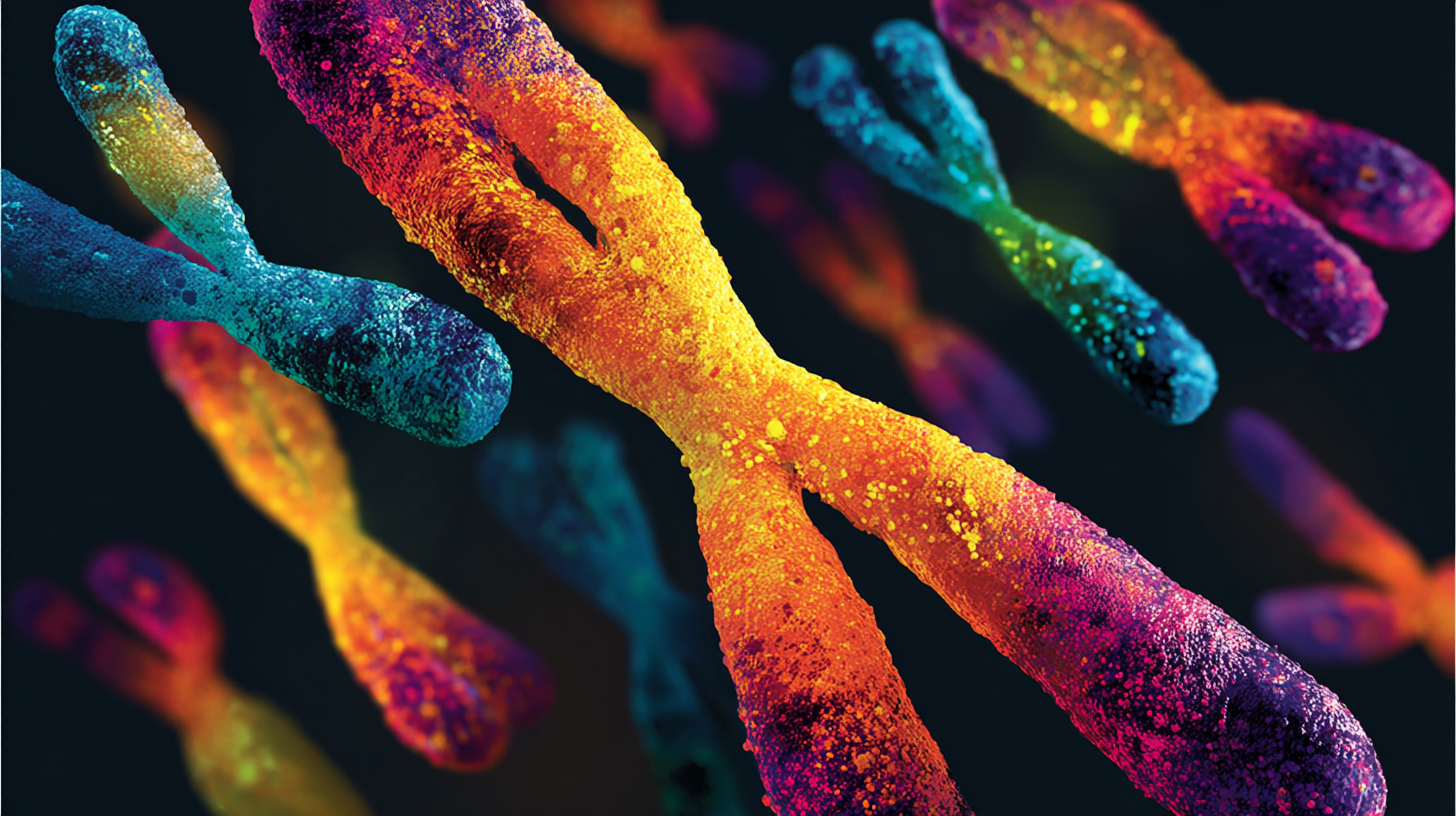
All genetic information in a living organism is stored in DNA, organised into structures called chromosomes, and expressed through functional units known as genes. Together, these form an organism’s genome. Each gene contains instructions that influence specific characteristics, such as eye colour, blood type, or how cells regulate growth.
To maintain life and allow reproduction, cells divide. The way cells divide determines whether genetic information is copied exactly or reshuffled to create variation.
- Mitosis produces genetically identical cells. It supports growth, tissue repair, and asexual reproduction.
- Meiosis produces gametes, or sex cells, with half the usual number of chromosomes. It introduces genetic variation through independent assortment and crossing over.
The interaction between these processes explains how organisms grow, how traits are inherited, and why variation exists within populations. A clear, visual understanding of these relationships is essential, which is why modelling and diagram use is a key part of this unit.
For a concise and student friendly overview of DNA and genes, see the Australian Academy of Science resource on genetics and epigenetics:
https://www.science.org.au/curious/epigenetics
Linking Cell Division to Inheritance
One of the central challenges for students is connecting cell division to observable inheritance patterns. Meiosis and fertilisation ensure that offspring receive genetic information from both parents, while also creating new combinations of alleles.
During meiosis:
- Chromosome pairs separate randomly, increasing variation
- Alleles may be reshuffled through crossing over
- Gametes carry one allele for each gene
When fertilisation occurs, the combination of two gametes restores the full chromosome number and creates a unique genetic individual. This explains why siblings can differ from one another and why populations are genetically diverse.
These processes underpin Mendelian inheritance and allow students to predict patterns in offspring using structured models and ratios.
A helpful visual explanation of meiosis and fertilisation can be found here:
https://www.yourgenome.org/theme/what-is-meiosis/
Predicting Patterns Using Mendelian Inheritance
Gregor Mendel’s work with pea plants laid the foundation for predicting inheritance patterns using probability. While real world genetics can be complex, Mendelian models remain a powerful teaching tool for understanding dominant and recessive alleles, genotype, and phenotype.
In this unit, students learn to:
- Use monohybrid crosses to predict offspring ratios
- Distinguish between genotype and phenotype
- Recognise how sex linked genes follow different inheritance patterns
Punnett squares and genetic crosses allow students to practise scientific reasoning and mathematical thinking at the same time. These skills are highly transferable and align well with inquiry based learning approaches.
For a clear explanation of Mendelian inheritance principles, see:
https://www.khanacademy.org/science/biology/classical-genetics
Genetics in Families, Communities, and Cultures
Inheritance does not occur in isolation. Family histories, cultural practices, and environmental factors all shape how traits are passed on and expressed.
Students explore inheritance patterns across generations using pedigree diagrams, which model how dominant and recessive traits appear within families. These diagrams help students visualise probability over time and recognise patterns that may not be obvious from a single generation.
The unit also provides an important opportunity to acknowledge and value First Nations Australians’ knowledges of heredity, particularly through kinship systems and marriage laws that have governed family structures for tens of thousands of years. These systems reflect a sophisticated understanding of inheritance, social organisation, and the long term wellbeing of communities.
Teachers may find the Australian Institute of Aboriginal and Torres Strait Islander Studies a valuable reference point:
https://aiatsis.gov.au/family-history
When DNA Changes: Mutations and Their Effects
Not all genetic change is inherited. Mutations can occur due to environmental factors such as radiation, chemicals, or errors during DNA replication. Some mutations are harmless, some are beneficial, and others can lead to disease.
In this unit, students investigate:
- Changes in DNA sequence or chromosome structure
- The difference between inherited and acquired mutations
- How mutations can disrupt normal cell regulation
This learning connects directly to real world contexts such as cancer biology and genetic disorders. Exploring these topics helps students see genetics as a living science that affects health, medicine, and society.
For an accessible overview of mutations and their causes, see:
https://www.genome.gov/genetics-glossary/Mutation
Genetics and Human Health
To consolidate learning, students examine the role of DNA in diseases such as haemochromatosis, sickle cell anaemia, cystic fibrosis, and Klinefelter syndrome. These case studies help students connect abstract genetic mechanisms to tangible human outcomes, while also encouraging empathy and ethical thinking.
Cancer provides a particularly powerful example, as it involves mutations in genes that control cell division, linking directly back to mitosis and DNA regulation.
Cancer Council Australia provides clear, student appropriate explanations of cancer genetics:
https://www.cancer.org.au/cancer-information/what-is-cancer
Unit Pathways and Linked Learning Pages
This unit overview connects to the following focused learning areas, each of which will be explored in detail in supporting pages (some of which are still being dceveloped):
- Using models and diagrams to represent the relationship between genes, chromosomes, and DNA of an organism’s genome
[View page] - Explaining how genetic information passed on to offspring from both parents by meiosis and fertilisation increases the variation of a species
[View page] - Using Mendelian inheritance to predict the ratio of offspring genotypes and phenotypes in monohybrid crosses involving dominant and recessive alleles or in genes that are sex linked
[View page] - Using pedigree diagrams to show patterns of inheritance of simple dominant and recessive characteristics through multigenerational families
[View page] - Investigating First Nations Australians’ knowledges of heredity as evidenced by kinship and family structures
[View page] - Exploring environmental and other factors that cause mutations and identifying changes in DNA or chromosomes
[View page] - Exploring the role of DNA in cancer or genetic disorders such as haemochromatosis, sickle cell anaemia, cystic fibrosis, or Klinefelter syndrome
[View page]
Teaching Focus and Classroom Value
This unit supports students in moving between scales, from molecules to cells to organisms and populations. It rewards visual thinking, logical reasoning, and thoughtful discussion. For teachers, it offers flexibility in delivery, strong links to inquiry based tasks, and clear alignment with curriculum expectations around heredity and variation.
When taught well, genetics is often the point at which students begin to see biology as something that explains themselves. That moment of recognition is powerful, and this unit is designed to support it.